
This is the time of year where we celebrate the turkeys who are safe with us and mourn the millions who will be killed this month. They all deserve peaceful and long lives. Forging a connection with farmed animals is part of the process of liberation. And sanctuaries create a place where that can actually happen. Here at Woodstock Farm Sanctuary, we get messages all the time about the connections people have made with the turkey residents who live here, either in person or by learning about them online, and seeing them living here in a non-exploitative context. People continue to tell us about the impact that Beatrice, who lived 11 years, had on them.
As we approach the 2026 holiday season, we are excited to announce that our turkey sponsorships are live HERE at Woodstock Sanctuary! This feels like a particularly special year, as we have a new resident Trudy, who joined our wonderful turkey flock!! Tai, Dionne, Cher, and Zillah have given Trudy the warmest welcome.
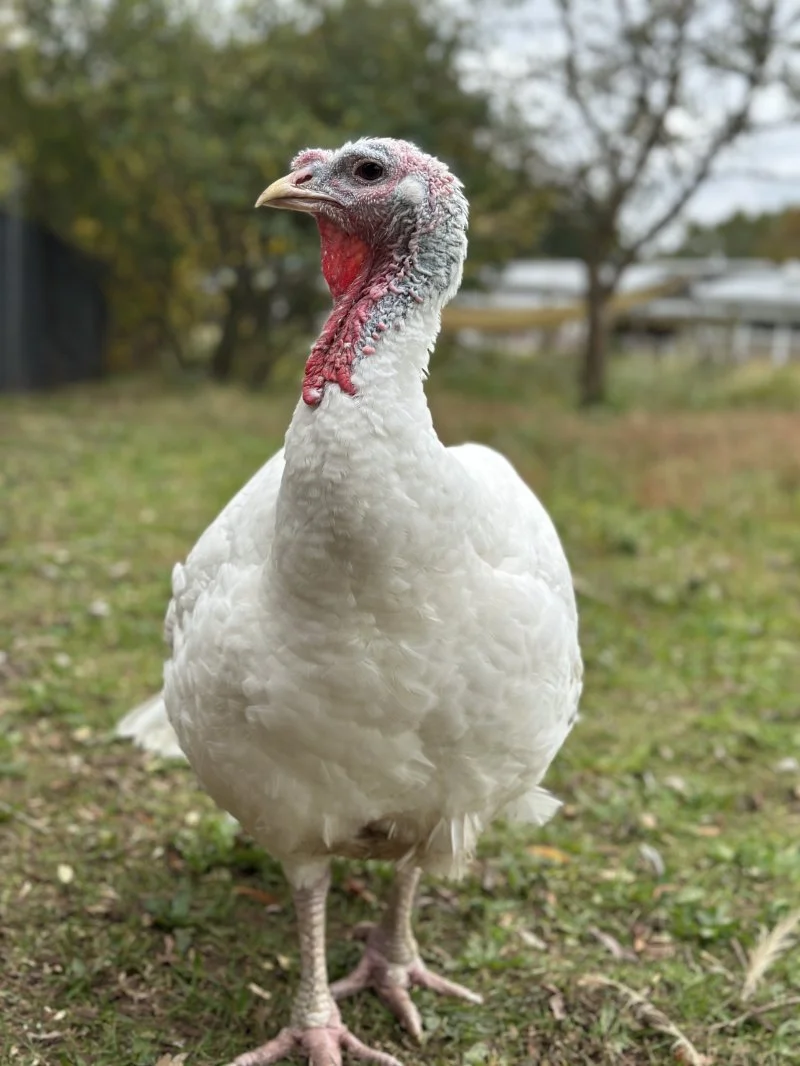
Beautiful Trudy in her field
This spring, we heard about a sick, very lonely turkey in need of a new home and immediate care. Trudy’s story is one of amazing resilience and strength. As soon as we learned about this sweet girl, we knew we needed to help her. Trudy is still so young—under two years old—but she has already survived so much. She has been attacked by foxes twice, chased and harassed by children who wanted to color and decorate her feathers, and was wounded several times in fights with roosters. When Trudy arrived at Woodstock Sanctuary, she was dangerously overweight and healing from multiple wounds.
Trudy is doing amazing with her recovery here in sanctuary, and her health has improved so much! She had never received a proper diet and is finally able to eat healthy food, which makes an enormous difference in a turkey’s lifespan. Trudy had also never lived with fellow turkeys! She is doing so well alongside Cher, Tai, Zillah, and Dionne!
Sponsoring Trudy or one of her friends during this season means contributing to their care and making a real connection with them—something many people never do. You can meet all the rescued turkeys here and choose one (or all) to sponsor! Give the gift of care to a rescued turkey this year.
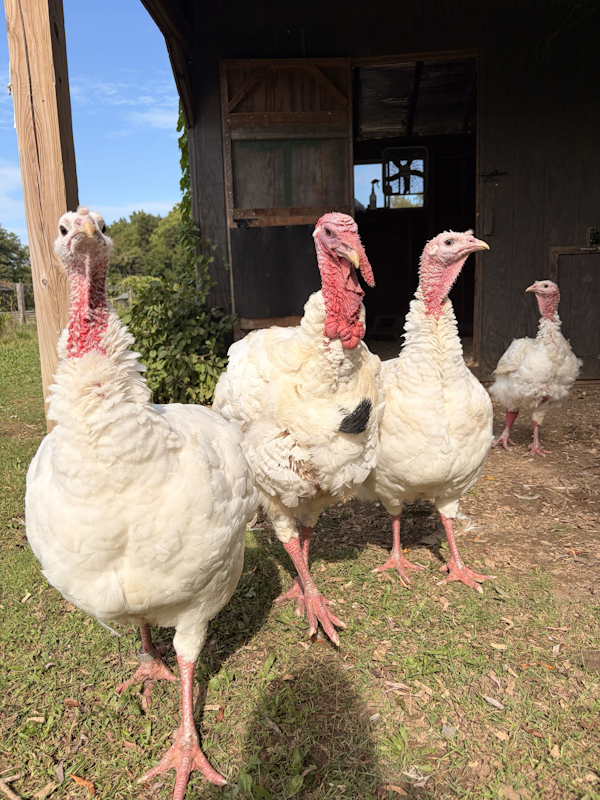
Trudy, Dionne, Zillah, and Cher strutting together
Why is turkey education so important? It’s not common for people to talk about or meet turkeys. In the United States, your first experience with turkeys might have been making paper turkeys in elementary school. Around Thanksgiving, the classic construction paper handprint turkey craft emerges in classrooms year after year. Google “turkey crafts” and even more brightly colored iterations emerge. Red, orange, yellow, and brown paper turkeys with stuck on googly eyes and triangle noses. Some of them sport pilgrims’ hats. Some of them include nods to the fact that the turkey is getting eaten. None of them teach the children anything about turkeys.
If you lived in a rural area growing up, your other first experience with turkeys might be seeing a wild turkey stuffed and mounted at the hardware store. You might know when turkey hunting season is and even participated in the hunt when you were old enough. You learn about turkeys a little bit—enough to know their vulnerabilities. You might own a turkey call so you can lure turkeys to you. But you still don’t get to know them.
And you might have encountered turkeys on a farm or at a petting zoo. You may have seen them in this situation and, knowing where they’re headed, chosen not to strike up a relationship. You may have been the recipient of pecks from a turkey who is trying to protect their area or feels threatened by you. You may have seen turkeys who have been fed a great deal so that they are large enough by slaughter time, struggling with mobility.
You probably haven’t seen them at larger scale farms, crowded in on each other, unable to sort out a social order that makes sense, with their toes and beak tips removed. You probably haven’t seen the turkeys at smaller scale farms, who are sick and receive no medical treatment. But between the turkeys you have and haven’t seen, it’s still likely you don’t really know a turkey.
We’re able to exploit a species when we separate ourselves from them, create myths about them (turkeys are frequently dismissed as “unintelligent’ with conditions resulting from humans’ selective breeding of them), and ensure that no one is able to forge real relationships with them.
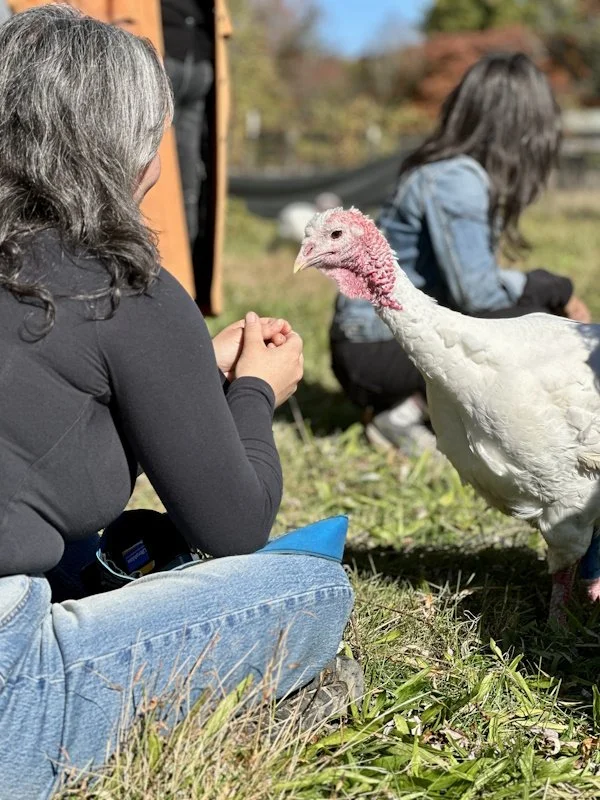
Cher greeting a visitor
No species is a monolith. You may have heard stories from humans who have had unpleasant encounters with turkeys. You may have heard stories from humans who have had close turkey friends that they love and have bonded with. What may be most important to recognize and internalize is that each turkey out there is an individual with their own thoughts, desires, comforts, and fears. When you see a turkey’s body on the store shelf, remember that. Tell others to remember. And share the connections you have with turkeys in sanctuaries so that others can start to recognize the individual.
We love turkeys and respect them so much. Join us in sponsoring one or two or the full flock today!
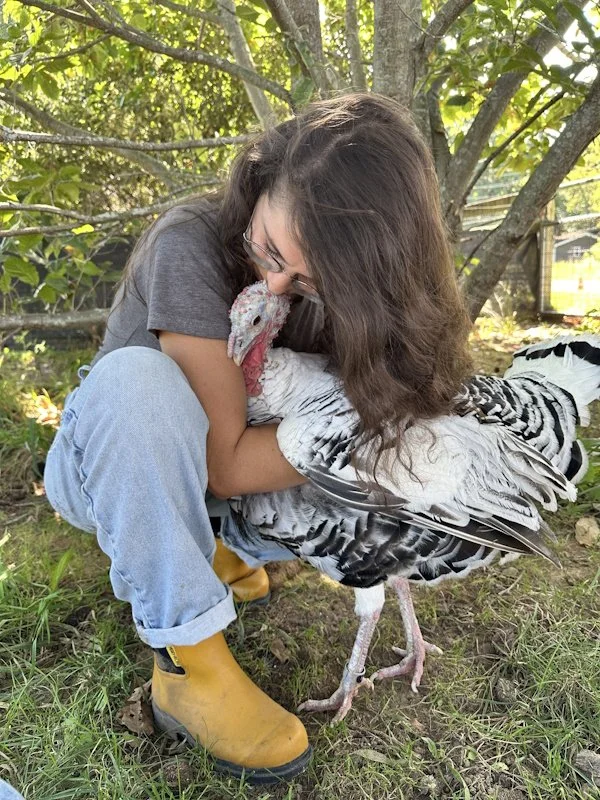
Caregiver Olivia and Tiny sharing a special hug