AI and Animal Rights - Our Sanctuary's Perspective
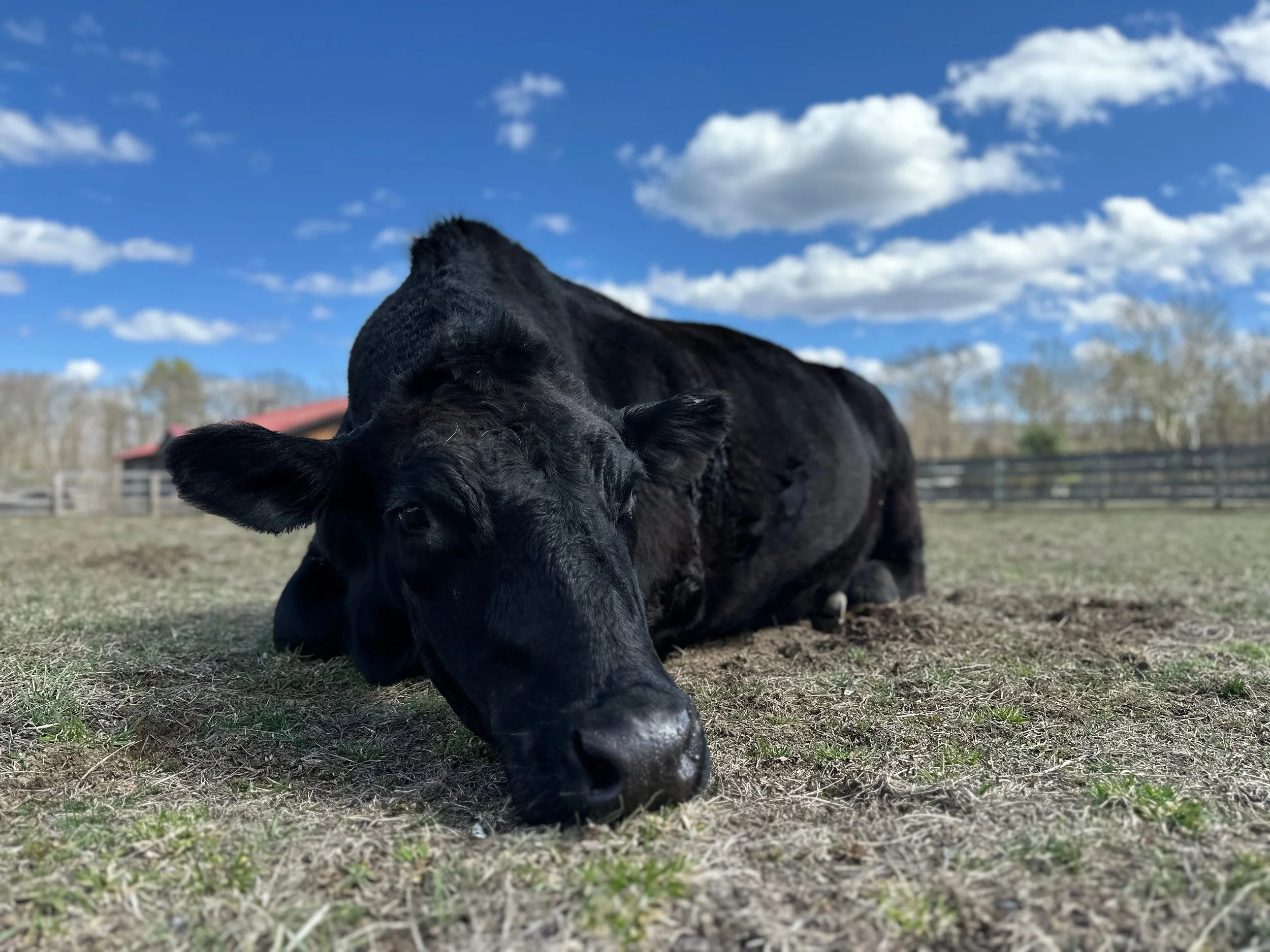
Judy, a cow rescued from hoarding, relaxed in the pasture
When image generation started becoming a more widely used “fun” tool a few years ago, we played around with it, too! Some websites were offering image generation to see yourself depicted in different historical eras. We made an image series with one of our residents, Mikey. When Instagram started offering AI backgrounds on stories, we checked those out as well. But in the span of the past year or so it’s become clearer and clearer that the use of AI image generation doesn’t align with our values as an organization. We’re clarifying Woodstock Farm Sanctuary’s policy now, and hoping to continue to spark conversations on the use of AI image generation especially when it comes to the animal rights movement.
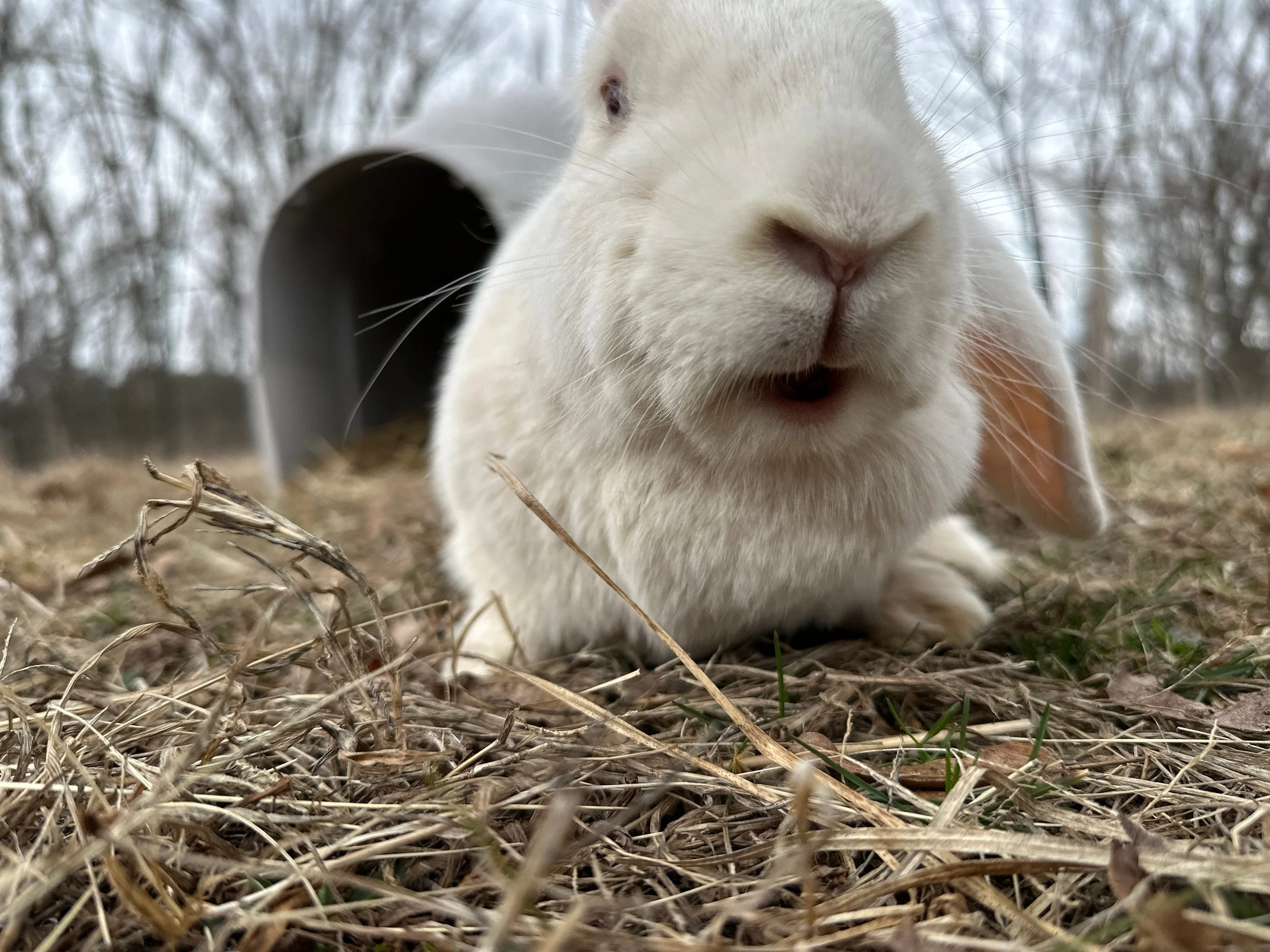
Donna, a rabbit rescued from laboratory testing, gives the camera a sniff
Our main concerns are twofold. First, we are concerned that AI image generation leads to the removal of real animals and their stories from the animal rights movement, further reducing them to an idea or concept instead of the individuals they are. As an advocacy and rescue organization, we strive to show animals as individuals with unique perspectives, personalities, and experiences. It is necessary for our activism and our approach to public education as experiential understanding through relationships, storytelling, and documentation. It is contrary to that to use technology to depict animals (farmed, domestic, or wild) as symbols or aggregate images instead of the individuals living in unique confined, domestic, or wild spaces. As farmed animal advocates we are lucky to have photo and video documentation of animals, their lives, and their lives in systems of exploitation that have been taken by activists, photographers, and others; and because of the work of sanctuaries and rescue groups like Woodstock Farm Sanctuary, we have photos of thousands of individuals who are rescued from those systems. These are the images that we should be sharing.
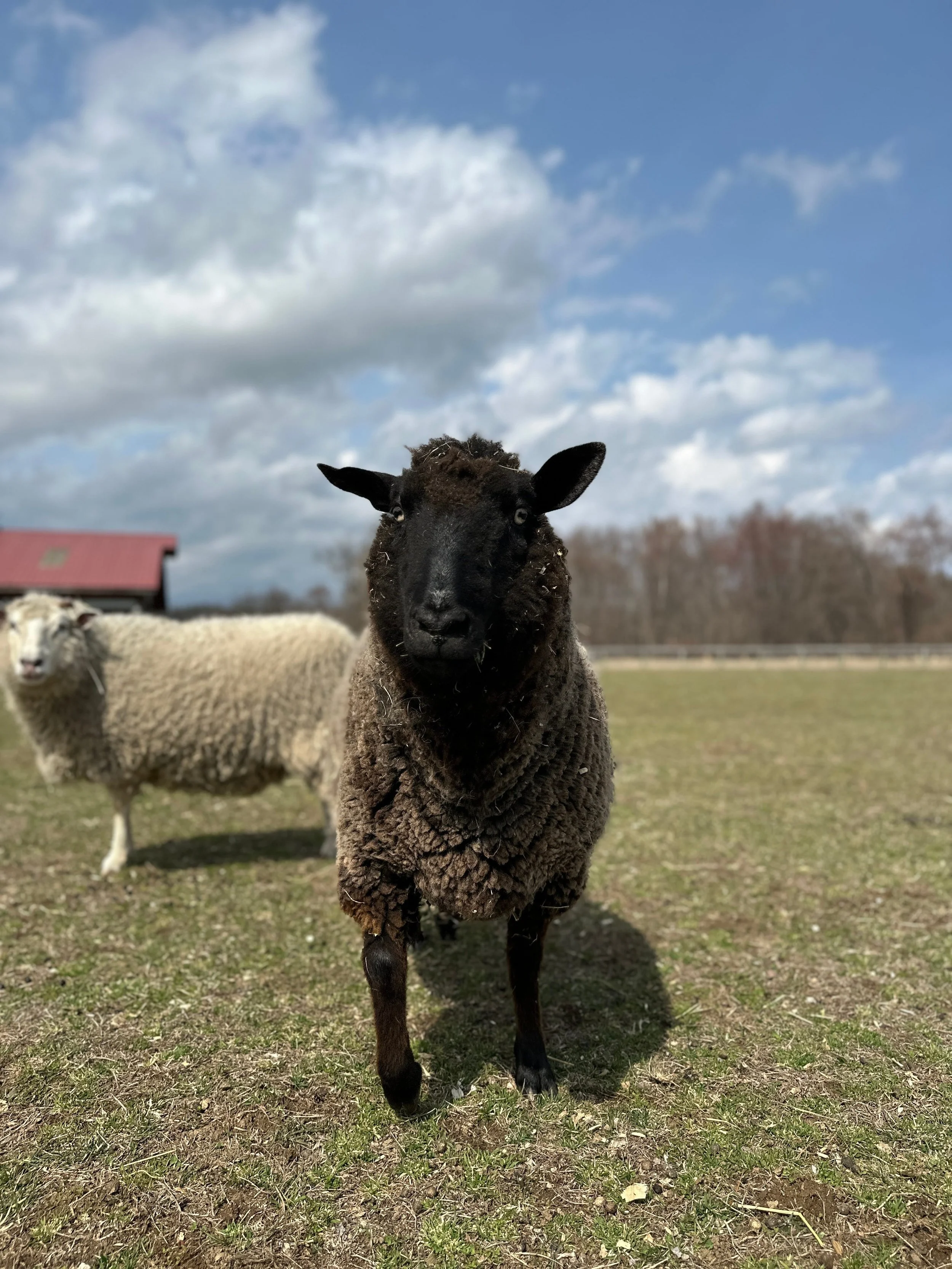
Nicole, rescued after being used for breeding, with her herd
Secondly, we now understand that AI image generation is a serious form of art theft. To create these images, AI must be “trained” using existing source material which is most often work from artists who have not given their consent for their material’s use. Artists do not receive compensation for their work being “scraped” for AI use. Here at Woodstock Farm Sanctuary, we’ve been proud to work with many different artists and designers in order to create illustrations to further our rescue work and advocacy messages. When we decide to use illustrations, we want to ensure that they are firstly created by artists who have received fair compensation for their work, and secondly that these images are based in reality and not falling into the trap we discuss above.
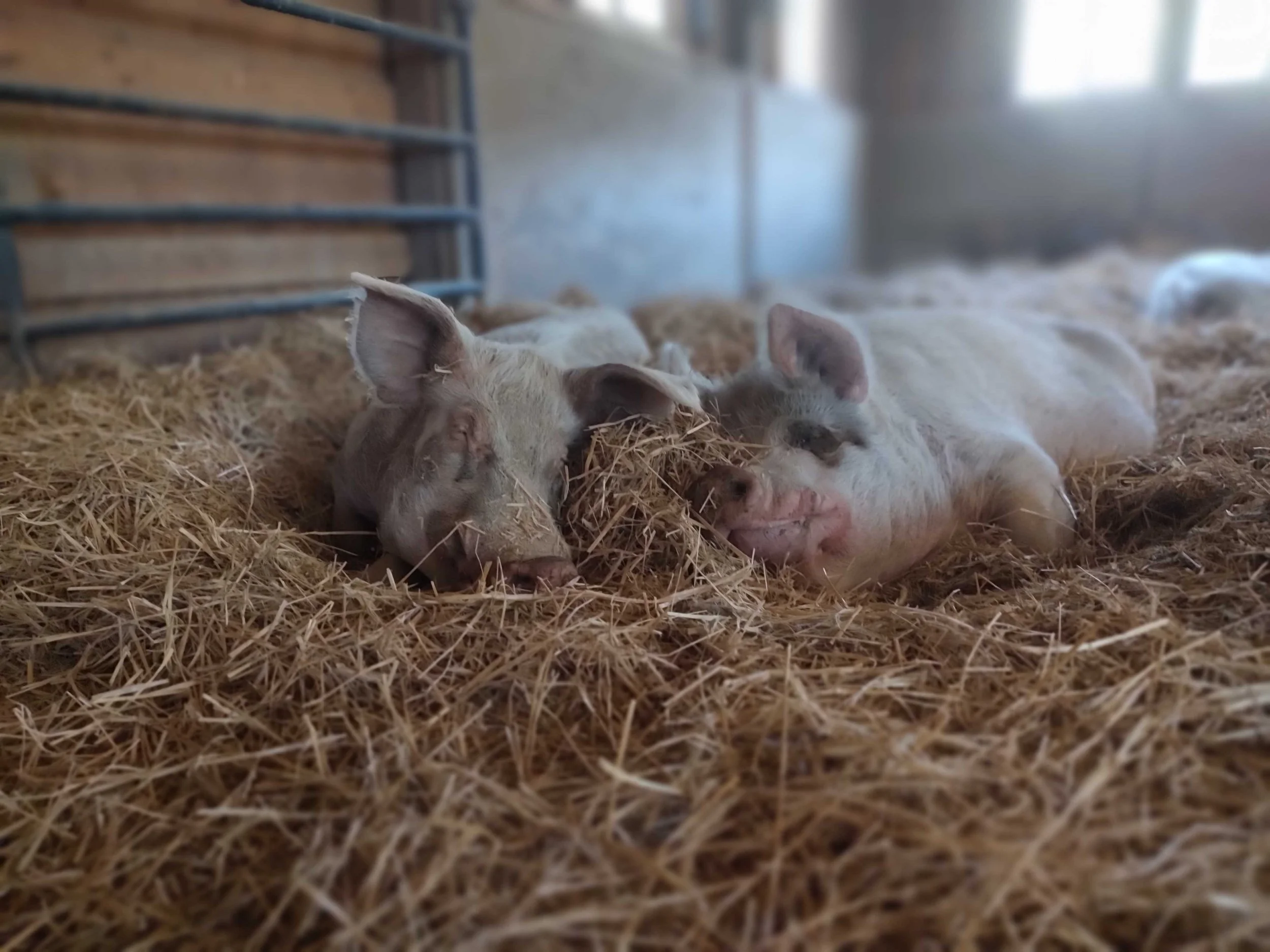
Ari and Mamma, rescued from slaughter, snuggle in the straw
So in summary, our current policy is this: Woodstock Farm Sanctuary creative or documentary content only features images of animals, including sanctuary residents, that are either photographic documentation or depictions created by a person (staff member, artist, designer, etc).
Woodstock Farm Sanctuary creative properties, including website, merchandise, social media platforms, and advocacy campaigns, do not use AI to create images of human or nonhuman animals or environments and instead should use photographic documentation or depictions as outlined in prior paragraph.
We know this issue continues to change and evolve, and look forward to continuing to discuss AI and its impact on animal rights issues in the future.